
Table of Contents
Weeds appear on lawns even with regular maintenance: their seeds are carried by wind, birds, soil, and shoe soles. They quickly occupy open spaces, deplete the grass of moisture and nutrients, spoil its appearance, and prevent the formation of a dense turf.
Effective weed control with chinch bug treatment Tampa isn’t a one-time weeding, but a systematic approach: prevention, proper mowing, soil improvement, and targeted measures against specific species. Below are practical ideas that will help restore your lawn’s even texture and resilience.
Why do weeds take hold in lawns?
Weeds most often “win” where the lawn has weak points: sparseness, soil compaction, improper watering, or cutting too close to the ground. The main goal is to create conditions as comfortable as possible for cultivated grass and unfavorable for weeds.
Typical Causes
- Thin turf due to missed seeding, frost, or trampling.
- Compaction (poor aeration), which deprives grass roots of oxygen.
- Watering errors: frequent, short waterings stimulate surface roots and give weeds a chance.
- Inappropriate pH and nutrient deficiencies, especially nitrogen during the active growth period.
Summary: How to Identify Weeds by Leaves, Stems, and Roots
To accurately identify weeds in your lawn, always evaluate the entire plant: the shape and arrangement of the leaves, the structure of the stem, and the type of root system. A single sign can be misleading, but a combination of two or three signs usually provides the correct answer.

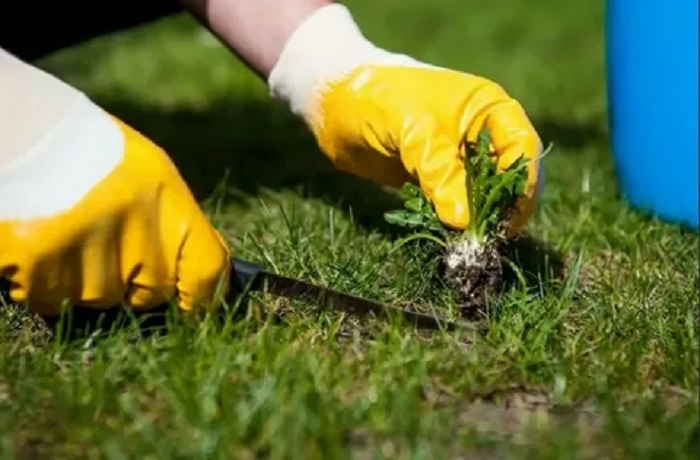
Conduct the inspection on a living specimen, preferably with a lump of soil: this makes it easier to see the roots and tillering nodes. Compare several plants in the same location, because young weeds often look different from mature ones.
Short Identification Checklist
- Leaves: width (narrow/wide), margin (smooth/serrated), pubescence, venation, arrangement (alternate/opposite/rosette), presence of stipules.
- Stem: shape (round/faceted), hollow or solid, branching, presence of nodes and rooting shoots, prostrate or erect growth.
- Roots: taproot (one main root), fibrous (clump of thin roots), presence of rhizomes, stolons, tubers; Depth of occurrence.
- Growth type: annual (seasonal) or perennial (returning from roots/rhizomes) – this determines the difficulty of removal.
- Leaves first: a rosette at the ground often indicates “broadleaf” weeds; very narrow leaves are more typical of grasses.
- Then the stem: creeping plants and those rooting at the nodes more quickly take over the lawn area.
- Finally, the roots: if there are rhizomes or a long taproot, removing the tops almost always results in regrowth.